
HDPE Chemical Compatibility: Reading Charts for Lab Bottles
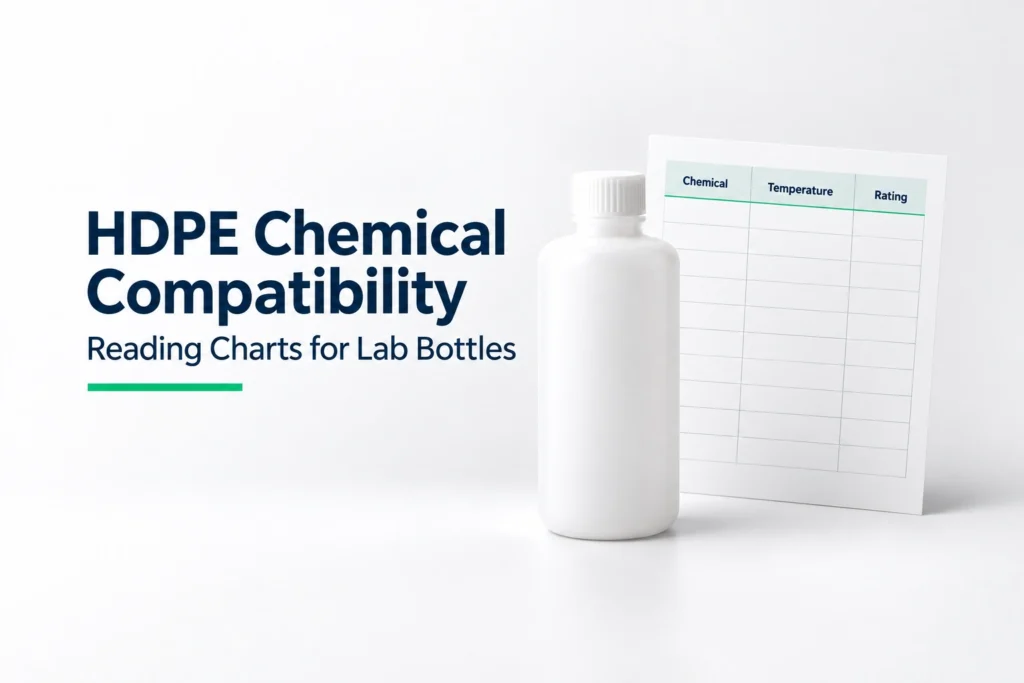
Introduction An HDPE chemical compatibility chart helps assess whether high-density polyethylene is a suitable bottle material for a particular reagent. The entries may not match the intended use exactly. For 70% ethanol, for example, the reference guide used for the table below lists ratings for 50% and 100% solutions but provides no separate 70% entry. […]
Which Tubes Are Suitable for −80°C Sample Storage?
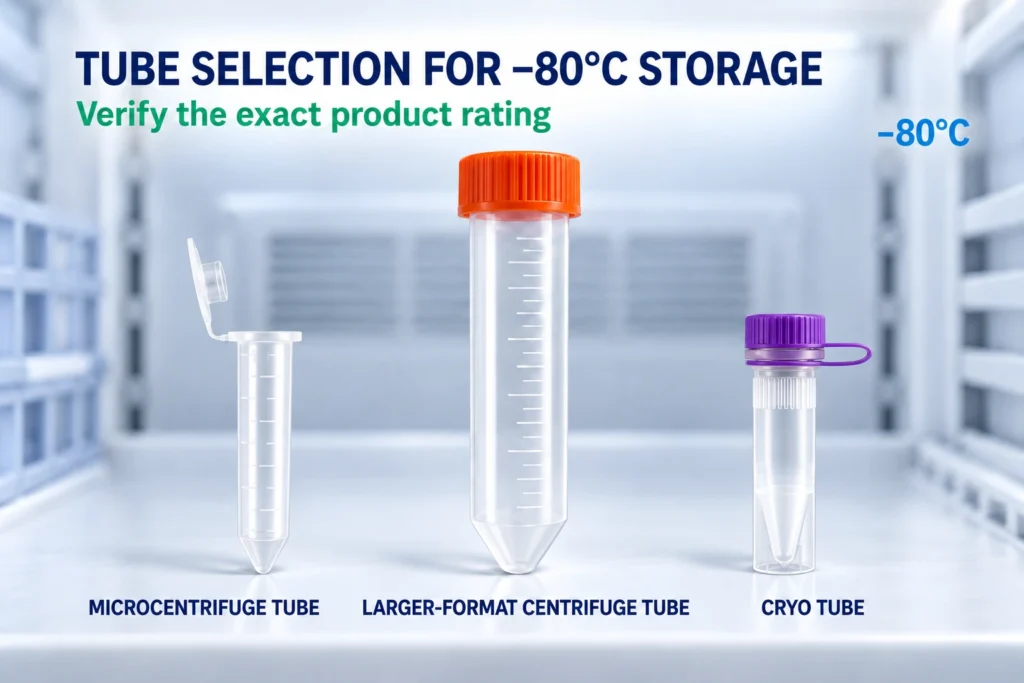
Introduction Specific products in all three categories—microcentrifuge tubes, larger-format centrifuge tubes, and cryo tubes—can be used at −80°C when the exact configuration is rated for that condition. A product name or a polypropylene material description is not enough to establish storage compatibility. When we review a request for “PP tubes for −80°C storage,” we do […]
Can Spin Columns Be Used with Different DNA Extraction Kits?
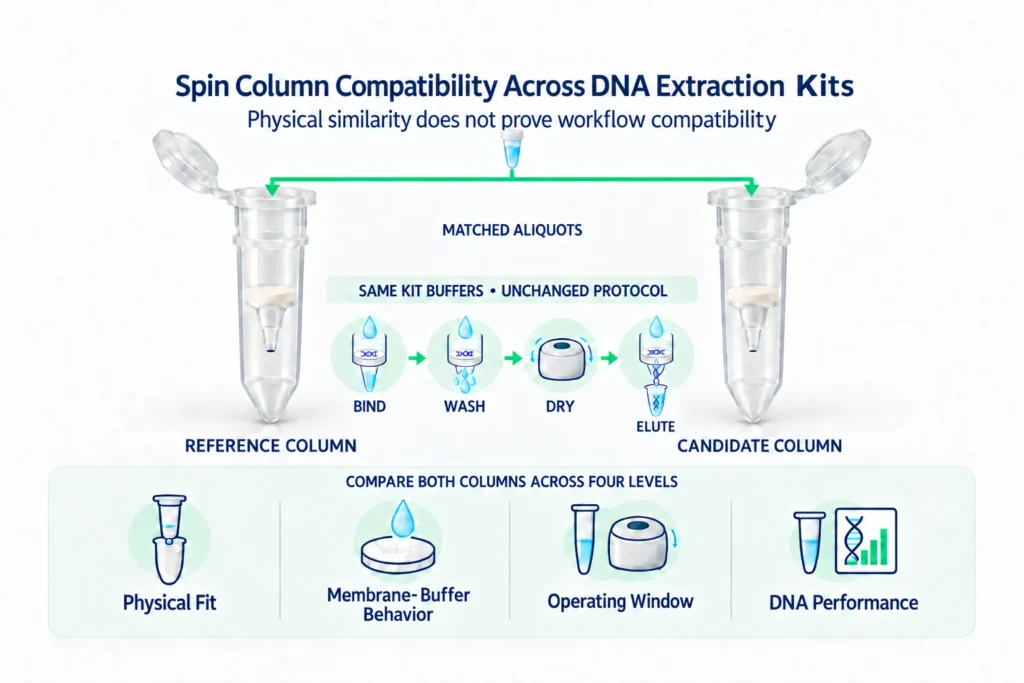
Why Similar-Looking Spin Columns May Not Be Interchangeable Replacing the column supplied with an established DNA extraction kit can appear straightforward. Products from different suppliers may share a similar housing, fit the same collection tubes, and use silica-based membranes. These similarities make substitution attractive during supply interruptions, secondary sourcing, cost review, or OEM component selection. […]
How to Test Low-Retention Pipette Tips Before Buying in Bulk
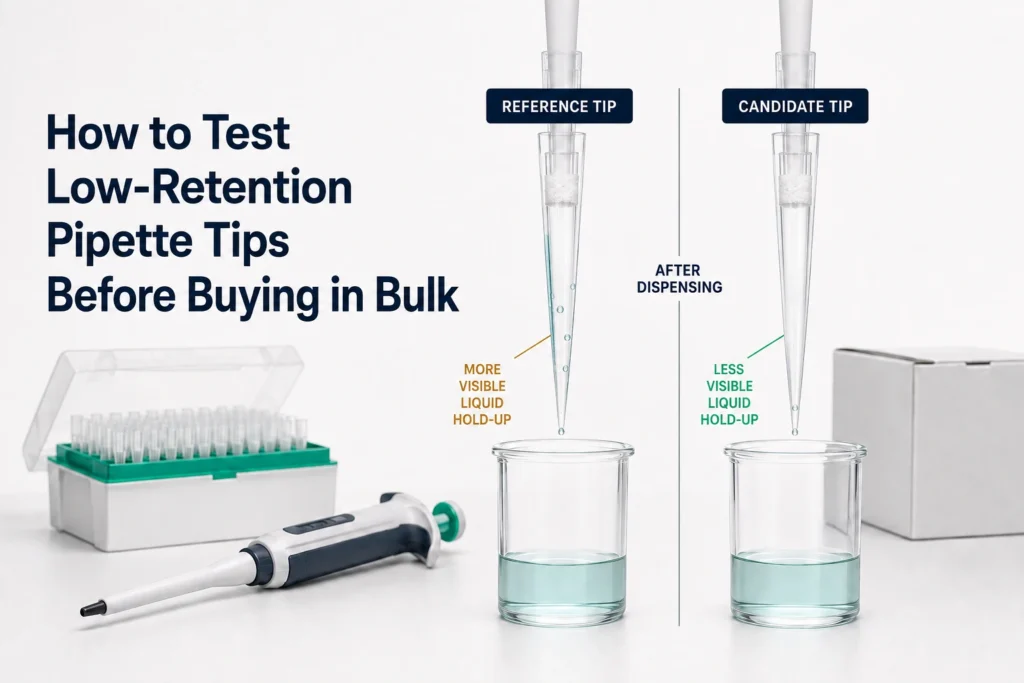
Introduction: Test the Performance Before Standardizing the Tip Low-retention pipette tips are often presented as a straightforward upgrade: less liquid remains on the inner wall, more sample is dispensed, and less reagent is wasted. For a laboratory preparing to buy by the case or carton, however, a product label or side-by-side photograph is not enough. […]
Low-Binding Microcentrifuge Tubes: When Are They Needed?
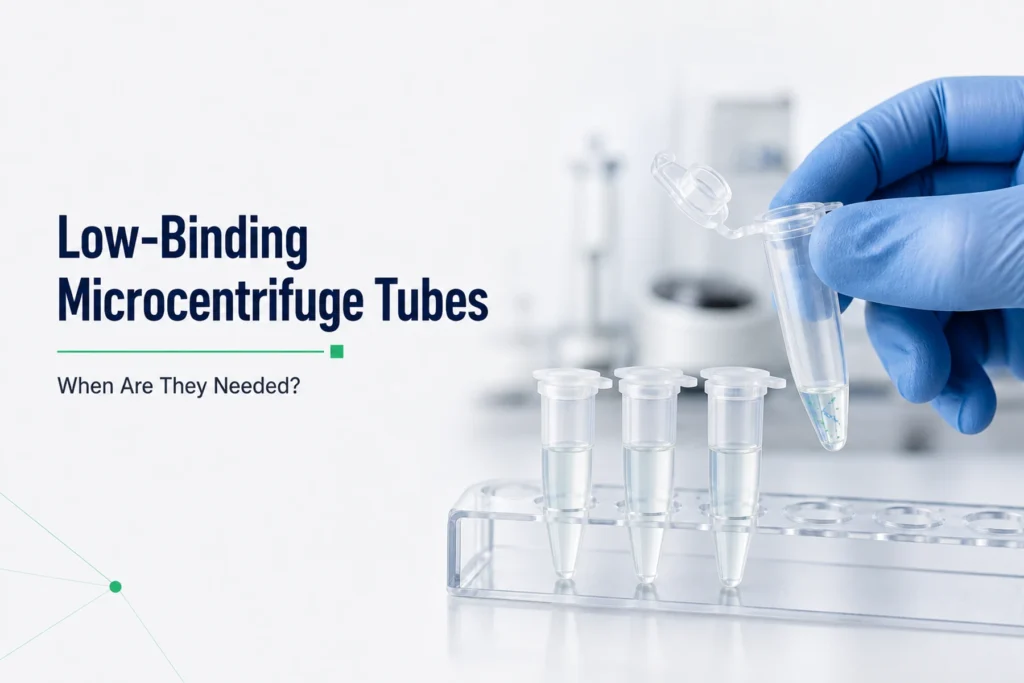
Low-binding microcentrifuge tubes are most useful for dilute, low-volume, or difficult-to-replace protein and nucleic acid samples when a small surface loss could change the experimental result. Consider a diluted enzyme that produces a weaker signal after several hours in a microcentrifuge tube. The cap remained closed, the liquid volume looked normal, and the pipetting steps […]
Automated Pipette Tips: When Are Conductive Tips Required?
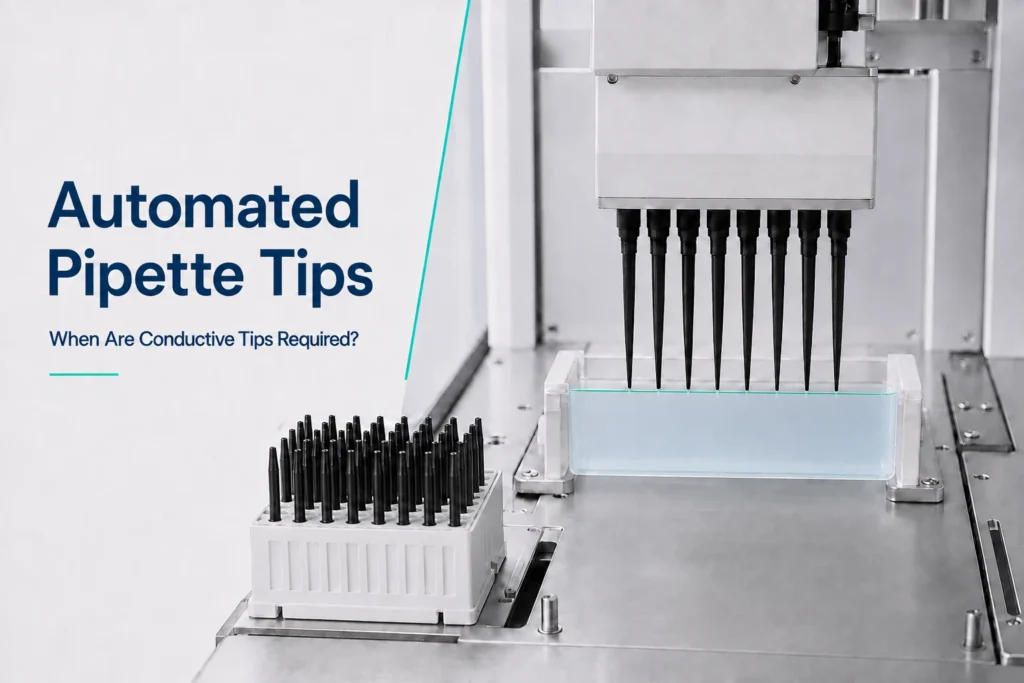
Automated pipette tips are often shortlisted by nominal volume and a general claim of robotic compatibility. That may be enough for an initial comparison, but it does not show how a tip will behave through a complete automated run. When fitting a tip manually, an operator can feel unusual resistance, reseat a loose connection, or […]
How to Choose a Cryo Box for Laboratory Freezer Storage
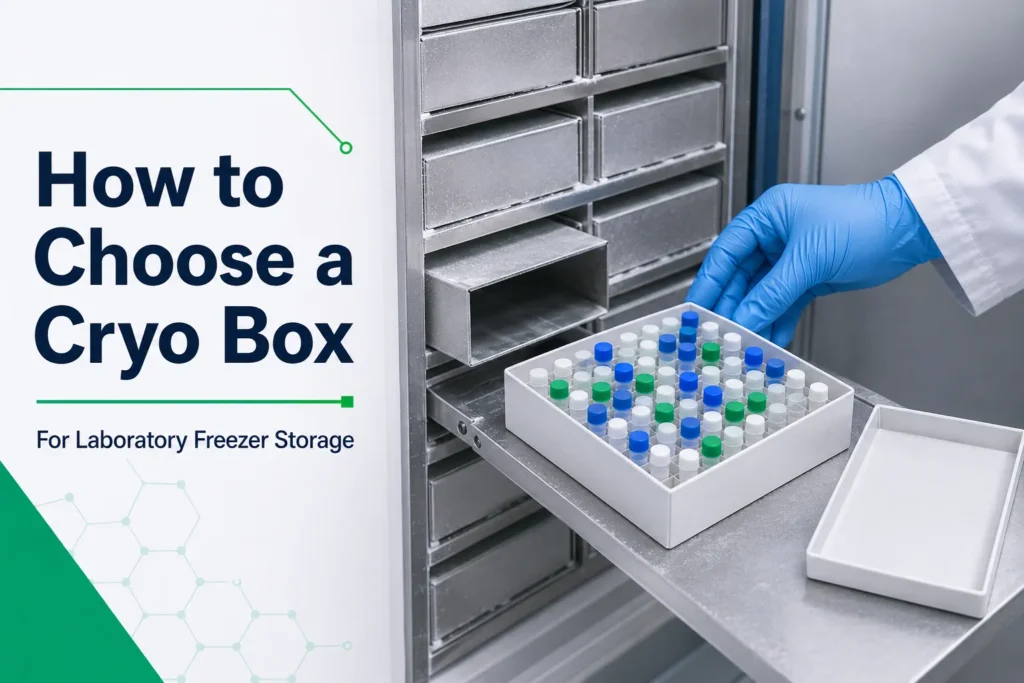
Introduction Choosing a cryo box for cryo tubes often starts with three specifications: well count, material, and nominal vial capacity. An 81-well cryo box or 100-well cryo box made from PP or PC may appear suitable for 1.8 or 2.0 mL cryovials, yet those descriptions do not show how the components will behave once the […]
Spin Column Troubleshooting: Causes of Clogging, Low DNA/RNA Yield, and Poor Purity
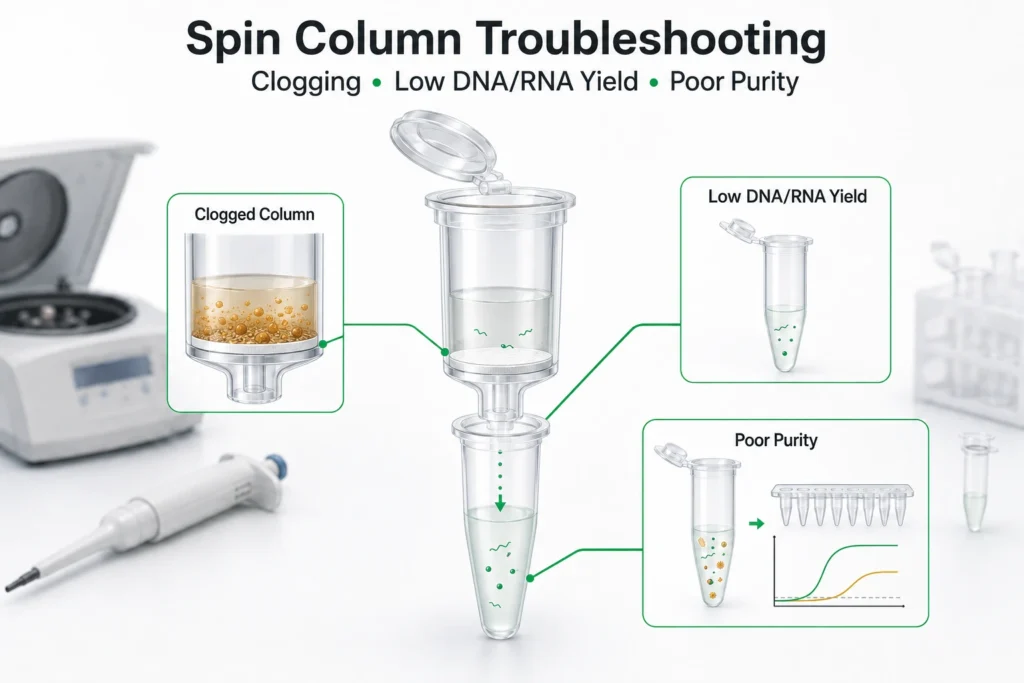
Poor silica-membrane spin column performance can appear as unusually slow flow, low DNA or RNA recovery, abnormal purity ratios, or failure of PCR and other enzyme-based assays. These symptoms do not share a single cause and, on their own, do not show that the column is defective. Many failures originate before sample loading. Incomplete lysis […]
How to Choose Plastic Reagent Bottles for Buffer, Solution, and Routine Chemical Storage
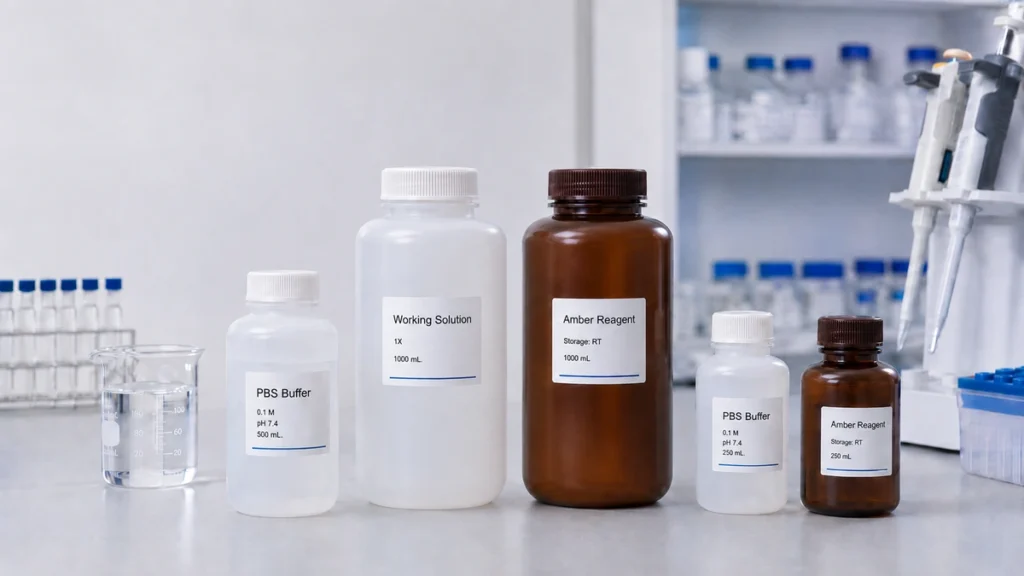
A plastic reagent bottle often looks like a simple storage container until it starts affecting daily laboratory work. A buffer bottle that is too large may be opened repeatedly by several users. A cap that does not close smoothly may become unreliable after weeks of routine handling. A clear bottle may be convenient for checking […]