Product Info
Kelabscience supplies cell culture shake flasks for suspension cell cultivation, routine orbital shaking, and laboratory-scale cell expansion. We work with laboratories, research organizations, and distributors to source suitable Erlenmeyer-style culture flasks according to their target culture volume, preferred material, bottom design, cap type, and procurement requirements.
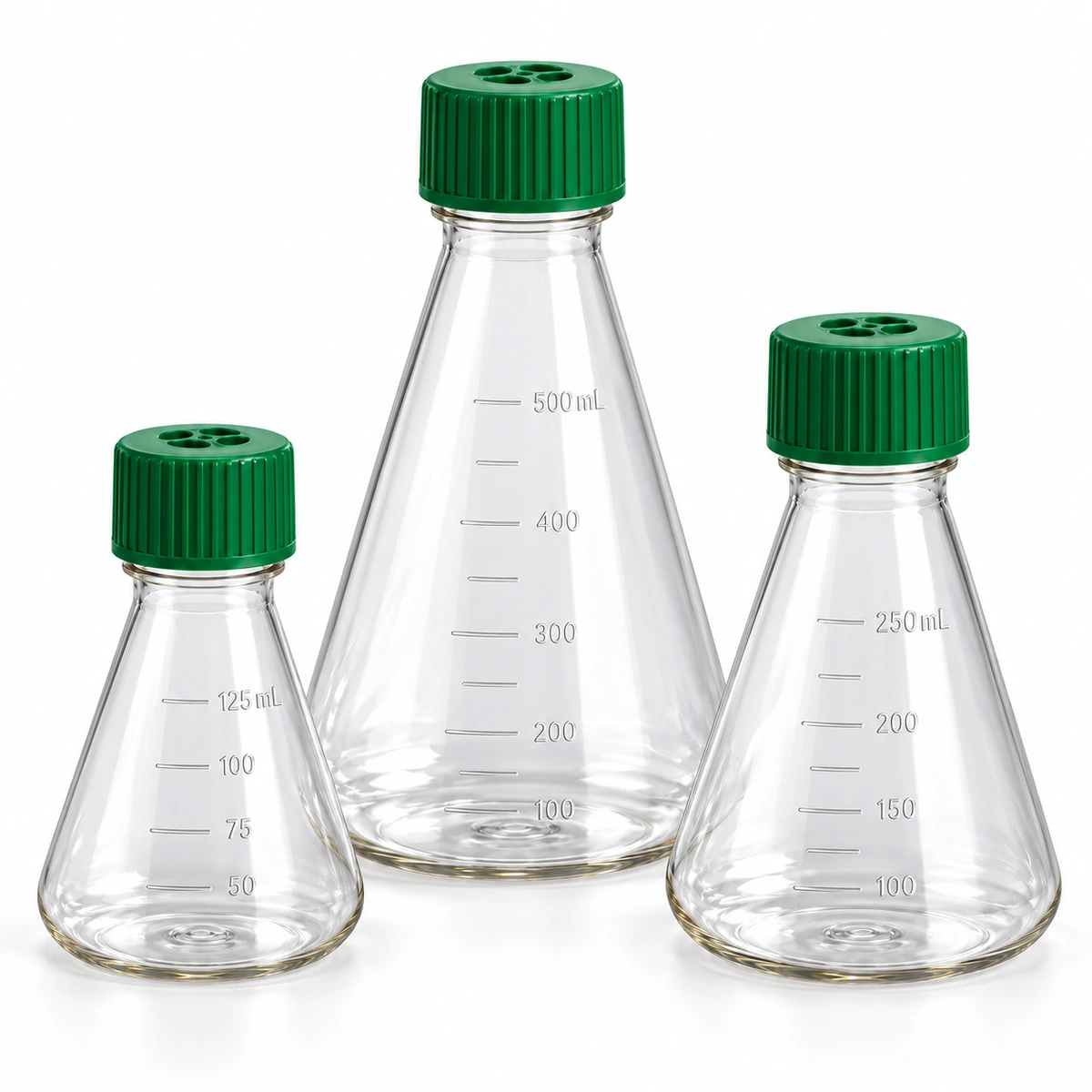
Our range covers seven nominal capacities: 125 mL, 250 mL, 500 mL, 1 L, 1.5 L, 3 L, and 5 L. Customers can choose PETG or polycarbonate (PC) material options and request vented or sealed screw caps. Sterile flasks are supplied individually packaged. Availability of specific material, cap, and bottom configurations will be confirmed based on customer requirements before quotation.
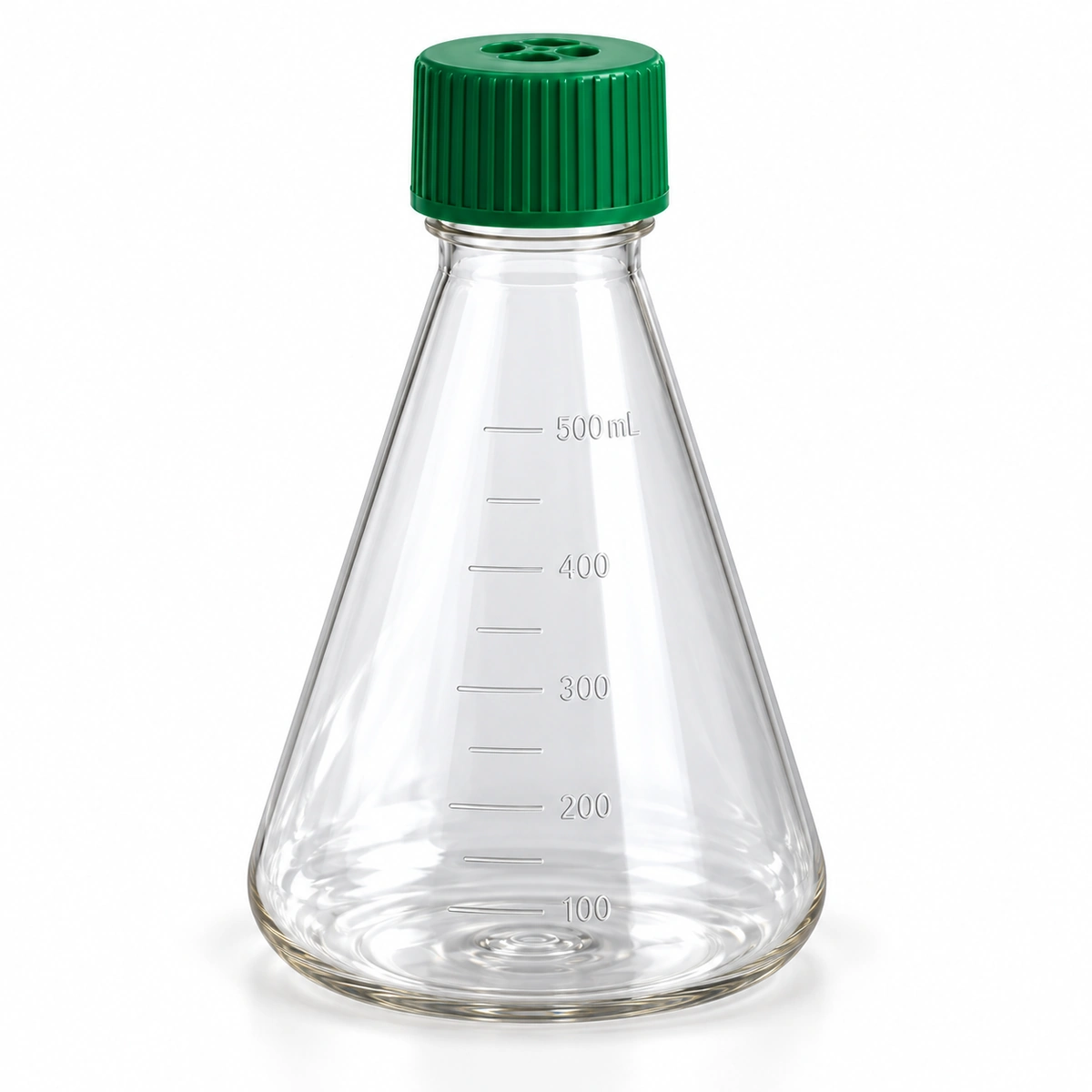
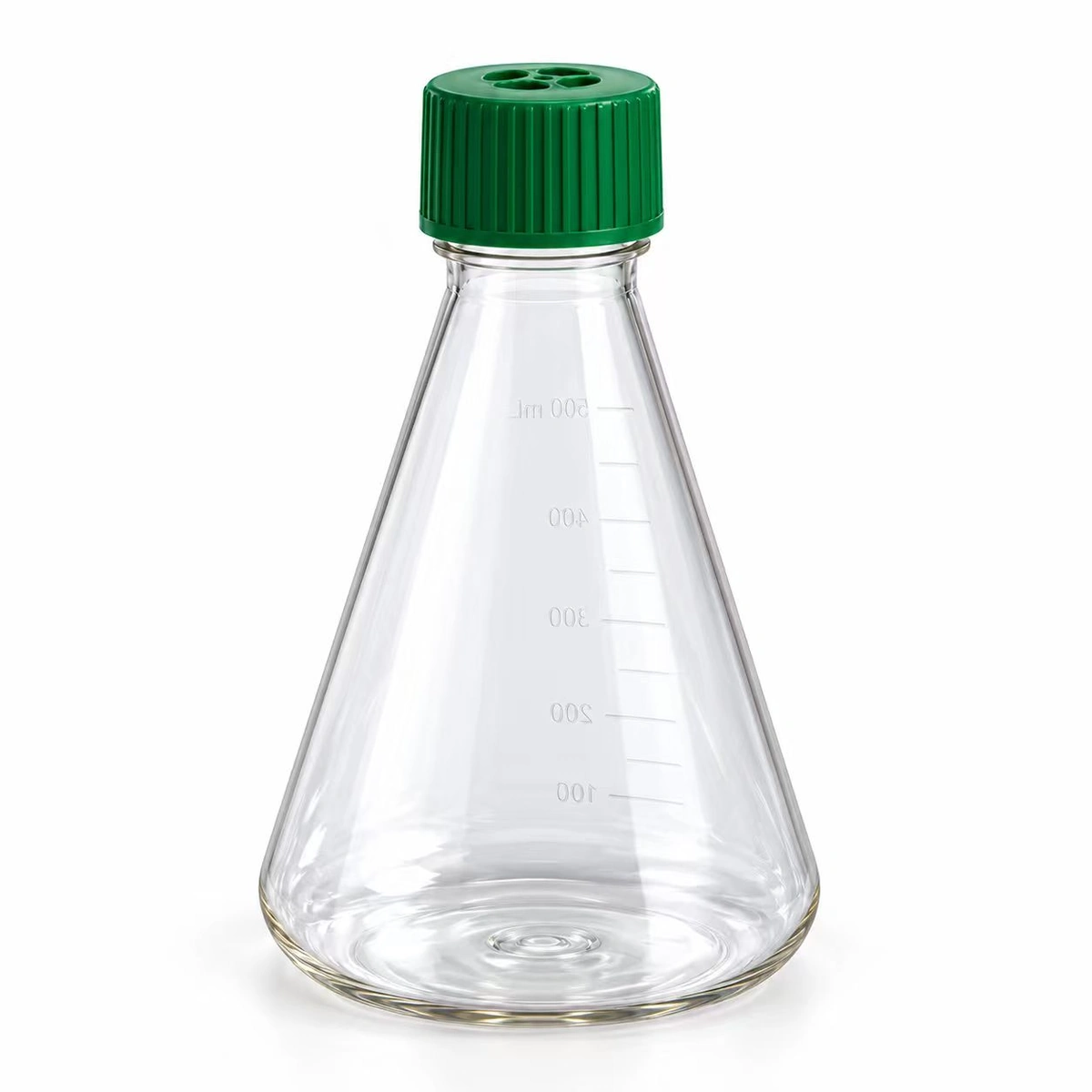
The conical flask body and broad base are suited to orbital shaking workflows. Clear plastic construction makes it easier to observe culture medium and liquid movement. Available bottom configurations include conventional plain-bottom designs and baffled-bottom options for selected sizes, allowing customers to select different mixing characteristics as appropriate for the intended culture system.
Available Product Configurations
-
Nominal capacities: 125 mL, 250 mL, 500 mL, 1 L, 1.5 L, 3 L, and 5 L.
-
Material options: PETG and polycarbonate (PC).
-
Bottom designs: Plain bottom; baffled bottom can be sourced for selected sizes upon request.
-
Closure options: Vented or sealed screw caps according to gas-exchange and handling needs.
-
Sterility and packaging: Sterile; individually packaged.
-
Ordering: Configuration and supply availability are confirmed for each inquiry.
Cell Culture Applications
Shake flasks are used for suspension culture workflows in which orbital agitation supports mixing and keeps cells or other biological material dispersed in the medium. Nominal capacity is not the same as recommended working volume; fill volume should be selected with reference to flask geometry, shaking speed, shaker orbit, cell type, and oxygen-transfer requirements. Plain and baffled bottoms can behave differently under the same shaking conditions, and baffled flasks are not automatically preferable for shear-sensitive cultures.
Bulk Supply and Procurement Support
At Kelabscience, we help laboratories and distributors compare capacity, PETG or PC material, bottom structure, cap configuration, and purchasing quantities. Please share your preferred nominal capacity, intended cultivation workflow, material, cap type, bottom design, and expected order quantity. We will review compatible configurations, confirm relevant product and packaging details, and prepare a quotation.
For laboratories sourcing additional culture vessel formats, explore our cell culture consumables range.
Key Features
-
Seven nominal capacities: 125 mL, 250 mL, 500 mL, 1 L, 1.5 L, 3 L, and 5 L for different cultivation scales.
-
Conical Erlenmeyer-style geometry: Broad base and tapered body for orbital shaking applications.
-
Two material choices: PETG or polycarbonate (PC), selected according to product configuration and workflow.
-
Bottom choices: Plain-bottom models and baffled-bottom designs for selected capacities and mixing requirements.
-
Cap flexibility: Vented and sealed screw-cap choices to match different gas-exchange requirements.
-
Sterile individual packaging: Each flask is supplied sterile and individually packaged.
-
B2B procurement support: Flexible specification review and quotation assistance for laboratories and distributors.
Applications
-
Suspension cell cultivation and laboratory-scale expansion
-
Routine orbital shaking and cell propagation
-
Culture preparation and experimental scale-up studies
-
Cell-based research and process development
-
Cultivation workflows requiring different mixing or gas-exchange conditions