
Product Info
Kelabscience supplies cell culture flasks for routine cell maintenance, adherent cell cultivation, and laboratory-scale cell expansion. We work with laboratories, distributors, and research organizations to help source suitable cell culture consumables according to their required growth area, surface treatment, closure type, and packaging specifications.
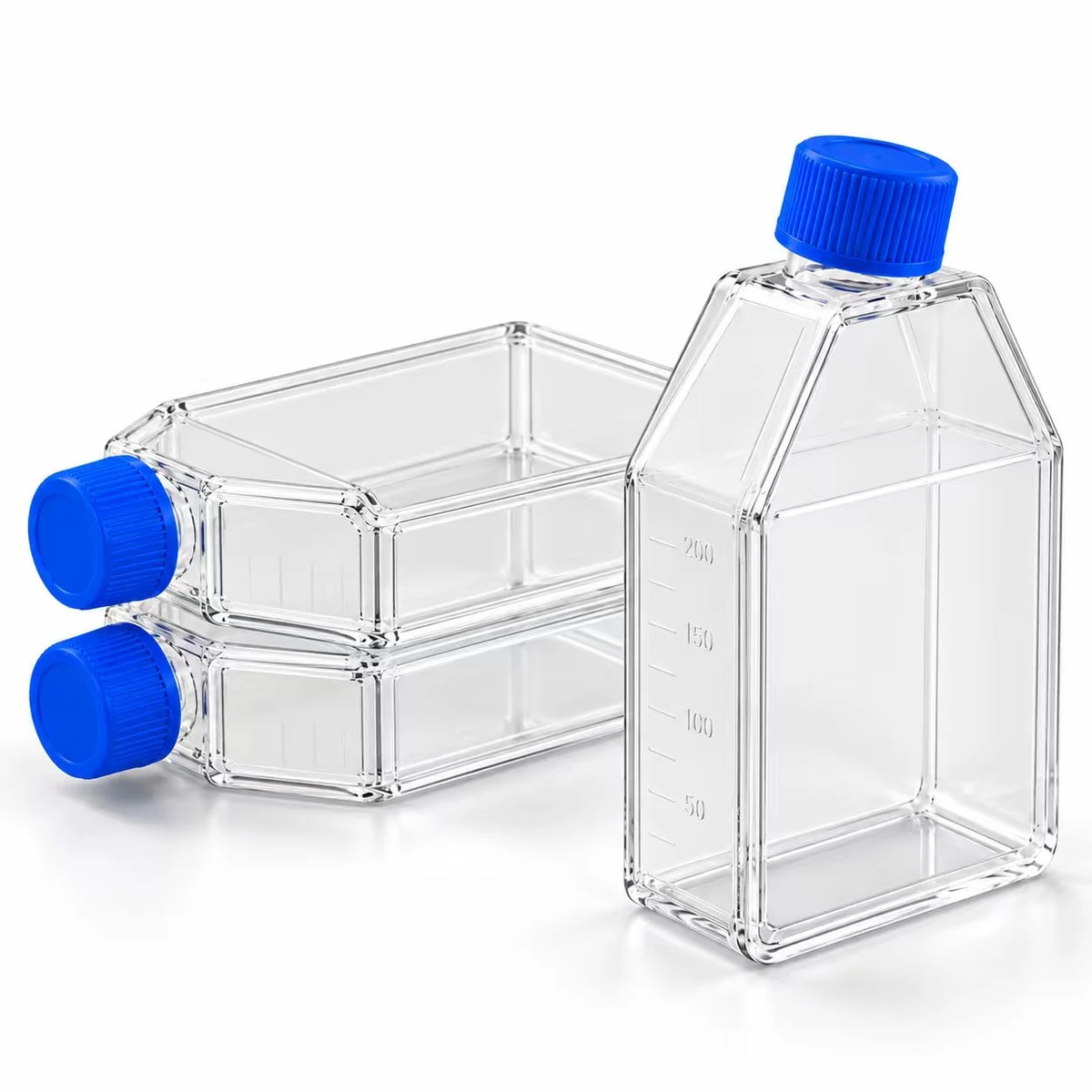
Our cell culture flask range includes T25, T75, T175, and T225 formats, covering different growth surface areas for applications ranging from small-scale cell maintenance and routine subculturing to larger-scale cell expansion.
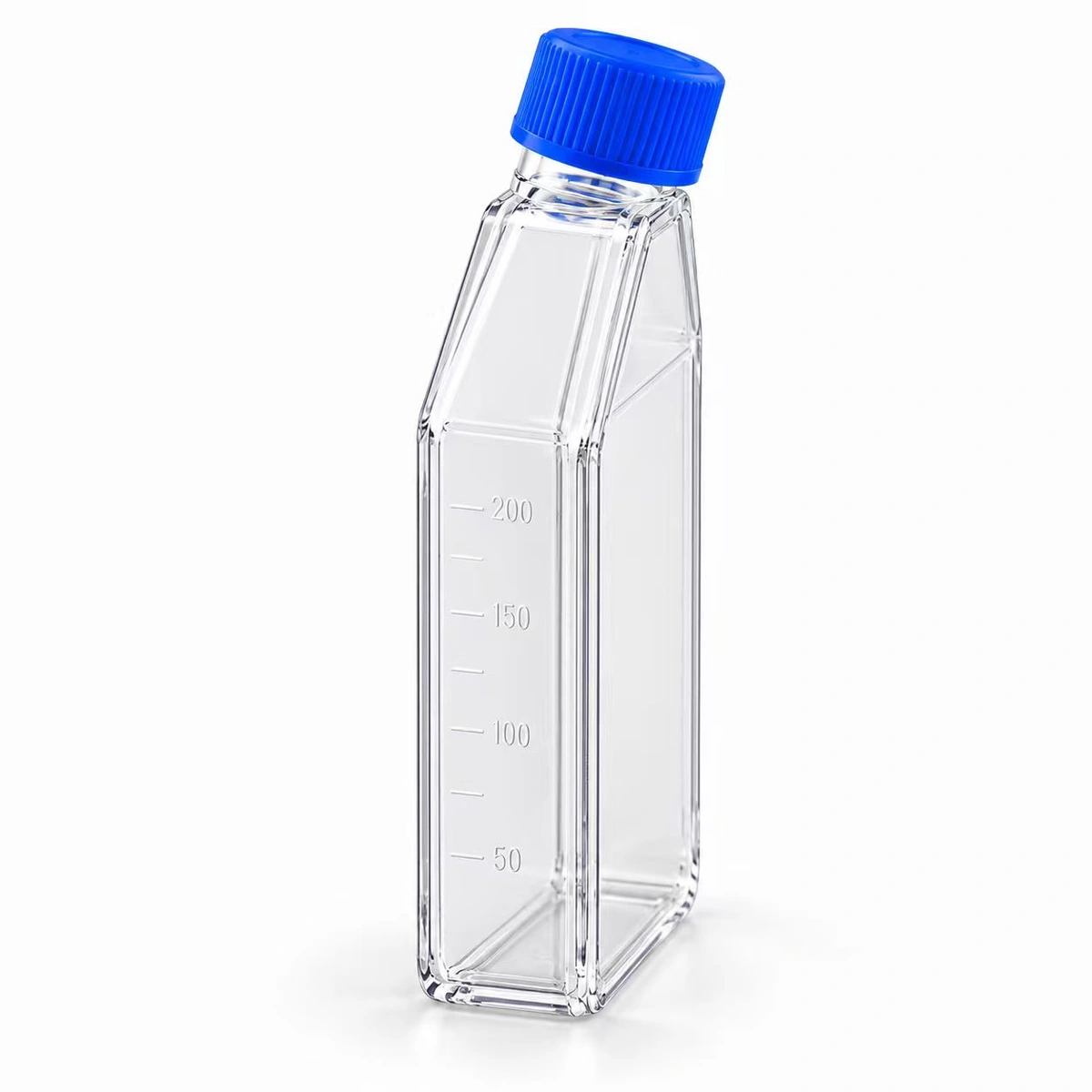
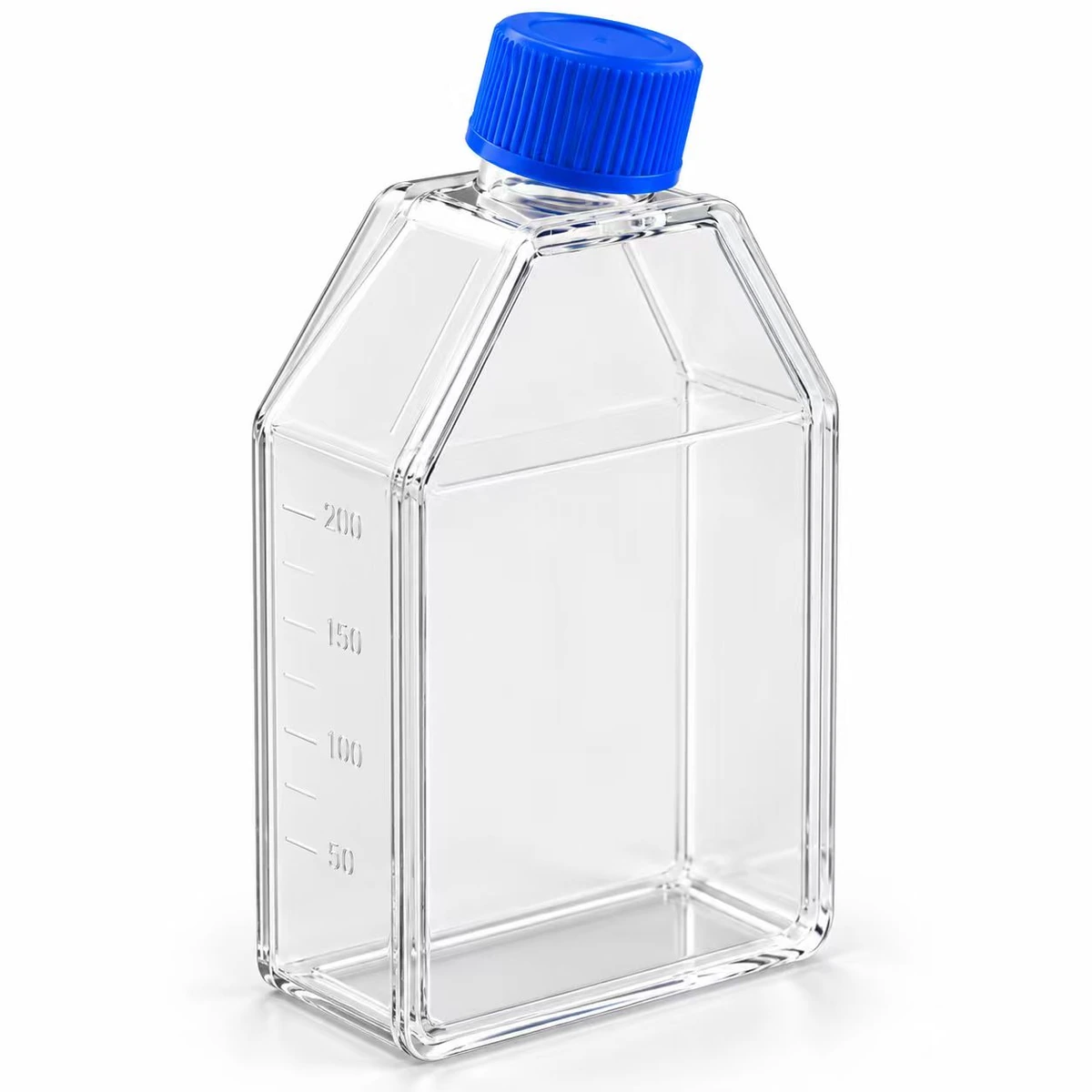
The flasks are manufactured from transparent polystyrene (PS), providing a clear view of the culture surface for routine microscopic observation. Their angled-neck design allows convenient access for pipetting, culture medium replacement, and cell harvesting while maintaining a broad, flat growth surface.
Available Product Configurations
-
Growth Areas: T25 (25 cm²), T75 (75 cm²), T175 (175 cm²), and T225 (225 cm²).
-
Surface Treatment: TC-treated and non-treated surfaces to accommodate different cell culture requirements.
-
Cap Options: Sealed caps and vent caps for different closure and gas-exchange requirements.
-
Neck Design: Angled-neck configurations for convenient pipetting and routine handling.
-
Material: Transparent polystyrene (PS).
-
Sterility: Sterile.
-
Packaging: T25: 10 pcs/bag; T75, T175, and T225: 5 pcs/bag.
Specific combinations of flask size, surface treatment, and cap type can be confirmed according to customer requirements.
Cell Culture Applications
These flasks are suitable for consideration in routine research laboratory workflows involving cell maintenance, cell propagation, experimental preparation, and expansion of adherent cell cultures.
When selecting a flask, the growth area should be matched to the intended seeding density and expected cell yield. Surface treatment is equally important, particularly when working with attachment-dependent cell lines. The selected cap should also accommodate the required gas-exchange conditions and handling procedures.
For routine liquid handling during cell culture workflows, laboratories can also explore our rack-packed filter pipette tips, with sterile options available according to the required configuration.
Bulk Supply and Procurement Support
At Kelabscience, we understand that laboratories and distributors often require more than a standard product description. Consistent product specifications, suitable packaging, and clear ordering information are important when sourcing cell culture consumables in larger quantities.
We can help customers review their required flask sizes, surface treatments, cap configurations, packaging preferences, and estimated purchase quantities before preparing a quotation.
For bulk orders, distributor supply, or specific configuration requirements, please contact Kelabscience with your preferred growth area, surface treatment, closure type, and expected order quantity. We will help verify suitable product options, packaging details, and supply arrangements.
Key Features
-
Multiple Growth Areas: T25, T75, T175, and T225 formats accommodate different culture surface requirements, from routine cell maintenance to larger-scale cell expansion.
-
Clear Polystyrene Construction: Transparent PS flask bodies support visual inspection and routine microscopic observation of cell cultures.
-
Angled-Neck Design: Provides convenient access for pipetting, culture medium replacement, and cell harvesting.
-
Surface Treatment Options: TC-treated surfaces support the attachment and growth of adherent cells, while non-treated surfaces are available for applications requiring different cell–surface interactions.
-
Closure Options: Vent caps support gas exchange, while sealed caps provide an alternative closure for workflows with different ventilation requirements.
-
Sterile Packaging: Supplied sterile, with T25 packed 10 pieces per bag and T75, T175, and T225 packed 5 pieces per bag.
Applications
-
Routine maintenance and propagation of adherent cell lines
-
Cell recovery and expansion following thawing
-
Subculturing and preparation of cells for downstream experiments
-
Laboratory-scale expansion of cell populations
-
Cell-based research and assay preparation
-
Research workflows requiring different culture surface areas, surface treatments, and closure configurations