
Introduction
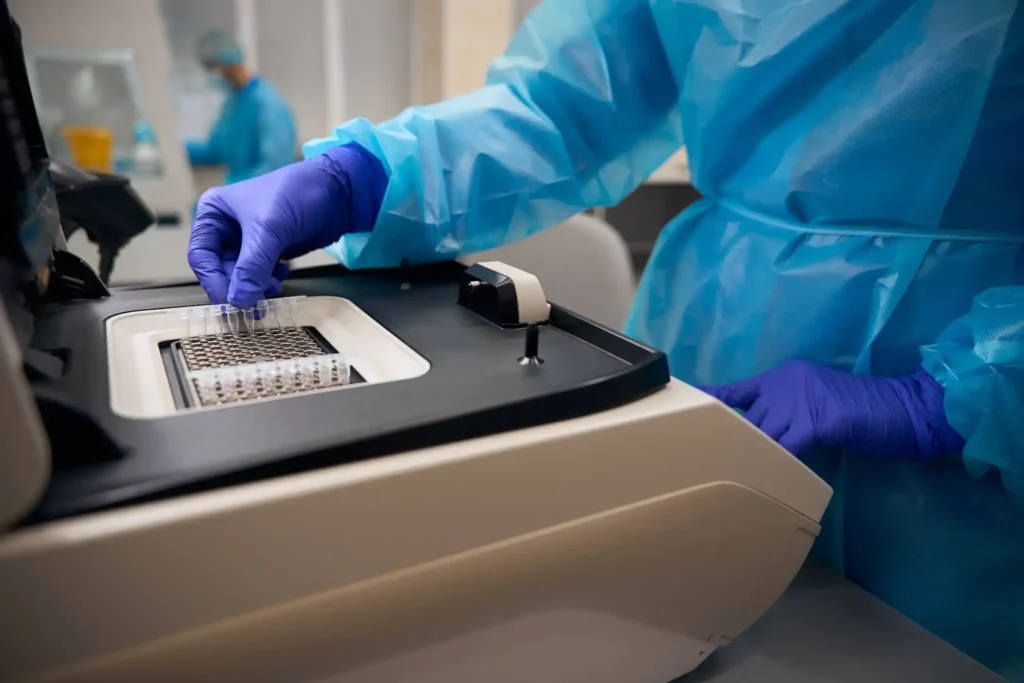
In many laboratories, 0.2 mL PCR tubes are used by default, often without much consideration. They are widely available, compatible with most thermal cyclers, and have become the standard choice for routine work. However, this “default choice” does not always align with how PCR reactions are actually performed today.
As reaction volumes become smaller and workflows shift toward faster cycling and qPCR-based detection, low profile PCR tubes (typically 0.1 mL) are used more frequently. In practice, the difference between these two formats is not simply about capacity or tube height. It directly affects how quickly samples respond to temperature changes, how consistently reactions perform across wells, and how well the setup matches the thermal cycler being used.
Because these effects are subtle, they are often attributed to reagents or instruments rather than the tube itself. As a result, tube profile is rarely questioned unless problems become noticeable, such as inconsistent amplification or unexpected variation in qPCR results.
This article focuses specifically on how tube profile influences PCR performance in real laboratory conditions. Instead of comparing specifications in isolation, it looks at when low profile or standard PCR tubes are actually more suitable, based on reaction volume, thermal behavior, and instrument compatibility. For laboratories evaluating different PCR tube formats, a clearer understanding of these differences can also support more consistent workflow decisions—particularly when selecting appropriate PCR tubes for routine laboratory use.
Why Tube Profile Is Often Overlooked in PCR Setup
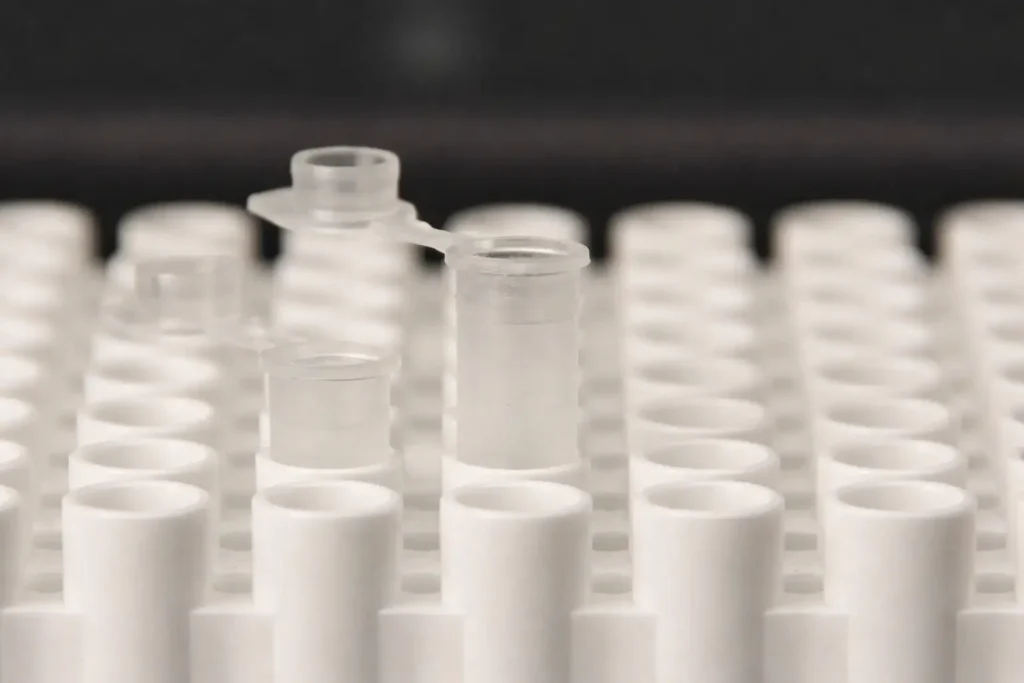
In routine PCR setup, tube profile is often overlooked because it is assumed to have minimal impact compared to reagents, enzymes, or cycling conditions. In practice, most laboratories adopt a standard tube format early on and continue using it across different experiments without reassessing whether it remains the best fit.
This tendency is partly driven by compatibility. Standard 0.2 mL tubes work reliably with most thermal cyclers, and their performance is generally stable across a wide range of reaction volumes. As a result, they become the “safe” choice, especially in environments where consistency is prioritized over optimization.
Another reason is that the effects of tube profile are not immediately visible. Unlike reagent issues, which may lead to clear amplification failure, differences in tube geometry tend to influence more subtle aspects of the reaction, such as heating uniformity, evaporation behavior, or cycle-to-cycle consistency. These effects accumulate gradually and are often attributed to other variables in the workflow.
In many labs, tube selection is therefore treated as a fixed parameter rather than an adjustable one. However, as reaction volumes decrease and thermal cycling programs become more demanding, this assumption becomes less reliable. Under these conditions, tube profile can start to play a more noticeable role in overall PCR performance, even when all other factors remain unchanged. In practice, this is often the point at which differences between tube formats begin to surface, especially in workflows that require higher consistency or faster cycling conditions.
Low Profile vs Standard PCR Tubes: Structural Differences That Affect Performance
Low profile and standard PCR tubes differ not only in volume, but in how their geometry influences heat transfer and reaction behavior during thermal cycling. While both formats are typically made from similar polypropylene materials, their shape and internal volume create distinct physical conditions for the reaction.
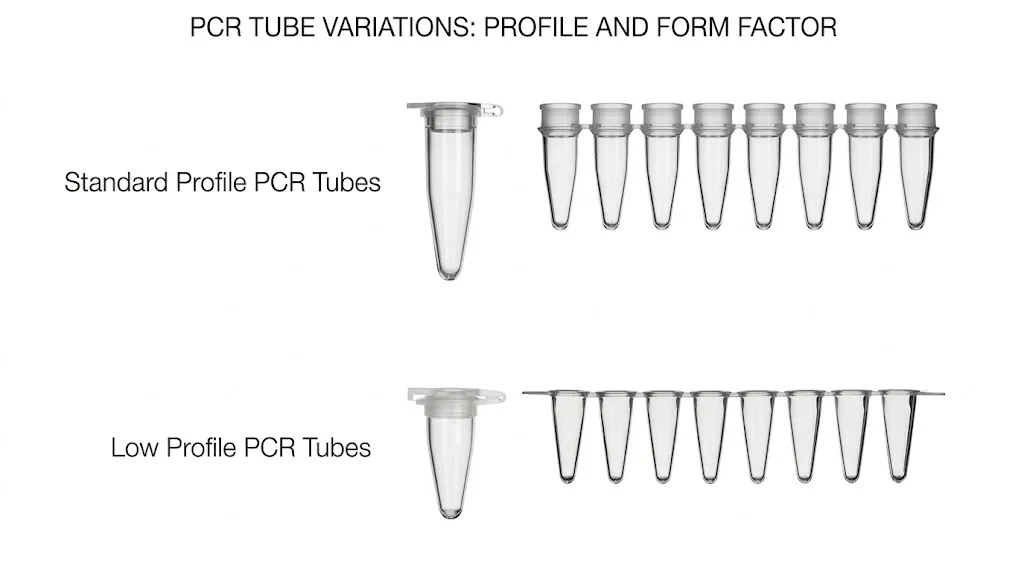
To better understand these differences, it is useful to compare their structural characteristics alongside their practical impact:
| Feature | Low Profile PCR Tubes | Standard PCR Tubes |
|---|---|---|
| Typical volume | ~0.1 mL | ~0.2 mL |
| Tube height | Shorter | Taller |
| Thermal response | Faster | Slightly slower |
| Headspace (small volumes) | Reduced | Larger |
| Best suited for | qPCR, low-volume reactions | Routine PCR, larger volumes |
The most obvious difference is height and nominal capacity. Standard PCR tubes are usually designed for up to 0.2 mL, resulting in a taller liquid column when filled. Low profile tubes, by contrast, are shorter and optimized for smaller reaction volumes, typically around 0.1 mL. This reduced height shortens the distance between the sample and the heated block, which can influence how quickly temperature changes propagate through the reaction mixture.
Another important factor is headspace. In standard tubes, smaller reaction volumes leave more air space above the liquid, which can contribute to evaporation effects during repeated heating cycles. Low profile tubes reduce this headspace when used with small volumes, creating a more compact thermal environment and helping to maintain reaction consistency.
These structural differences may seem minor in isolation, but they directly shape how the sample responds during each PCR cycle. For a broader understanding of PCR tube types and materials, these structural variations are often considered alongside differences in material properties and design configurations used across PCR and qPCR workflows.
Thermal Response: Why Low Profile Tubes Heat and Cool Faster
Low profile PCR tubes generally heat and cool faster than standard tubes because the reaction mixture is distributed in a shorter column with less thermal distance to overcome. This difference becomes more noticeable as cycling speeds increase or reaction volumes decrease, particularly in fast PCR protocols where hold times are shortened.
In practice, temperature changes in PCR do not occur instantaneously throughout the sample. Heat is transferred from the block into the tube and then through the liquid. In a taller tube with a larger volume, this process takes slightly longer to reach uniform temperature across the entire reaction mixture. Low profile tubes reduce this delay by minimizing the vertical distance heat must travel.
This faster thermal response can be beneficial in fast PCR protocols, where shorter denaturation and annealing times leave less margin for temperature lag. It can also improve consistency across wells in high-throughput runs, where small variations in heat transfer may otherwise accumulate, which is often where common PCR tube problems during thermal cycling begin to appear.
However, faster heat transfer does not automatically mean better performance in all cases. Standard tubes, with their larger volume and slightly slower response, can provide a more stable thermal environment in longer or less time-sensitive protocols. The practical difference is therefore not just speed, but how well the tube profile matches the cycling conditions being used.
Reaction Volume Constraints: When Tube Size Starts to Matter
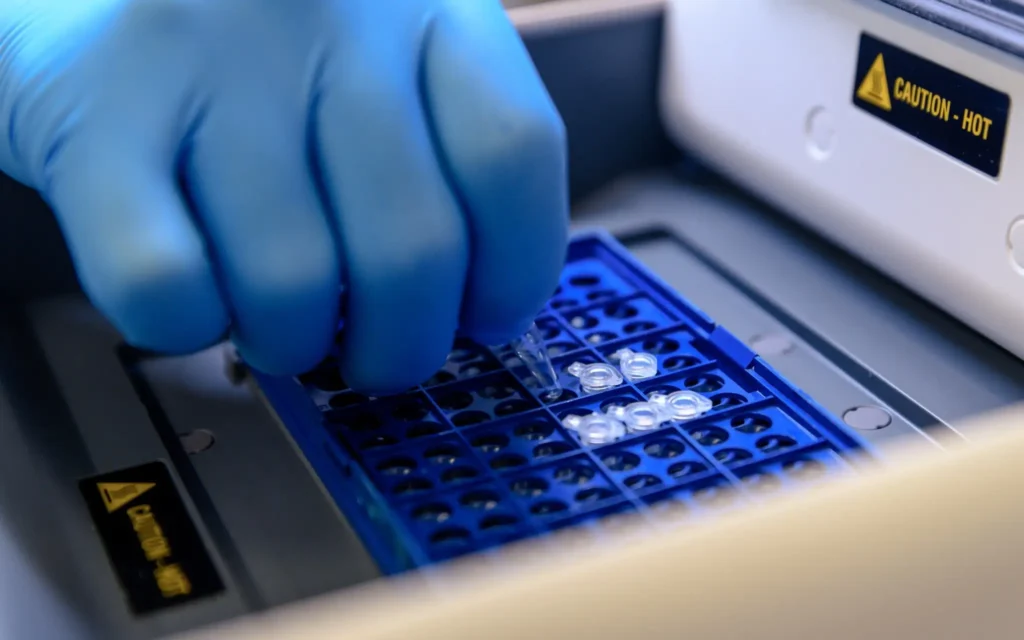
Reaction volume is one of the most practical factors in deciding between low profile and standard PCR tubes, with smaller volumes generally favoring low profile formats. In most routine applications, the difference becomes noticeable when reaction volumes drop below approximately 20 µL. In many standard PCR protocols, reaction volumes typically fall within the 10–25 µL range, making this threshold practically relevant rather than theoretical. In practical terms, reactions at or above 20 µL are generally well suited to standard tubes, while volumes below 20 µL tend to benefit from low profile formats.
At lower volumes, standard 0.2 mL tubes leave a relatively large headspace above the reaction mixture. During repeated heating cycles, this excess air space can contribute to evaporation effects, even when caps are properly sealed. While these losses are often small, they can introduce variability over multiple cycles, particularly in sensitive applications where contamination control in PCR workflows becomes more critical.
Low profile tubes reduce this headspace by design, allowing small reaction volumes to occupy a greater proportion of the tube. This creates a more confined thermal environment, which helps maintain consistency in both temperature distribution and reaction composition throughout the cycling process.
For larger reaction volumes, the advantage becomes less pronounced. When the tube is more fully occupied, the relative impact of headspace decreases, and standard tubes perform reliably without introducing additional variability. In these cases, the choice of tube profile has less influence on overall performance compared to other factors such as reagent quality or cycling parameters.
qPCR Considerations: Is Low Profile Always the Better Choice?
Low profile PCR tubes are often preferred for qPCR because their faster thermal response can help improve signal consistency by reducing small variations in thermal response between wells, but they are not always the better choice in every setup. The advantage depends on how the tube profile interacts with detection requirements and instrument configuration.
In many qPCR workflows, rapid and uniform temperature transitions contribute to more consistent amplification curves, especially when reactions are run in small volumes. Low profile tubes support this by reducing thermal lag, which can help stabilize fluorescence signals earlier in the cycling process.
However, qPCR performance is not determined by tube profile alone. Optical clarity, cap design, and sealing consistency often play a more direct role in signal detection. For example, flat caps or optical caps are typically required for accurate fluorescence reading, and mismatches in cap type can offset the benefits gained from improved thermal behavior.
Instrument compatibility is another practical consideration. Some qPCR systems are optimized for specific tube heights or formats, and using low profile tubes in a system designed for standard tubes may affect positioning or lid pressure. In such cases, any theoretical advantage in heat transfer may be reduced by mechanical mismatch.
As a result, low profile tubes are generally a strong choice for qPCR, particularly in low-volume, high-throughput settings. But in practice, reliable qPCR performance depends on the combined effect of tube profile, cap design, and instrument compatibility, rather than any single factor alone.
Instrument Fit and Lid Pressure: A Practical Constraint Often Ignored
PCR tube performance is not determined by tube design alone—how well the tube fits the thermal cycler and interacts with the heated lid can significantly influence results. In practice, mechanical compatibility is one of the most overlooked yet practically important factors when switching between low profile and standard tubes.
Thermal cyclers are typically calibrated with specific tube dimensions in mind. Standard 0.2 mL tubes generally align well with most block designs, providing stable seating and consistent contact with the heating surface. Low profile tubes, being shorter, may sit slightly differently in the block, depending on the instrument. In some cases, this can affect how evenly heat is transferred across wells.
Heated lid pressure is another variable that becomes more noticeable with different tube profiles. The lid is designed to apply downward force to ensure proper sealing and to minimize evaporation during cycling. If the tube height does not match the expected format, the pressure applied may be slightly reduced or uneven, which can influence sealing consistency—especially in low-volume reactions.
These effects are usually subtle and may not cause immediate failure. However, in applications that require high reproducibility, such as qPCR or high-throughput screening, small differences in fit and pressure can contribute to variability between samples.
For this reason, tube profile should always be considered together with instrument compatibility. Even when low profile tubes offer advantages in thermal response, their performance ultimately depends on how well they match the thermal cycler’s design and lid configuration.
Where Most Selection Decisions Go Wrong
Most issues related to PCR tube selection do not come from choosing the “wrong” product, but from relying on default choices without considering how reaction conditions have changed. In many cases, tube selection is treated as a fixed parameter, even when workflows, volumes, or instruments have evolved.
A common situation is continuing to use standard 0.2 mL tubes for low-volume reactions. While this setup generally works, it is not always optimal. Excess headspace and slower thermal response may introduce small variations that become more noticeable in sensitive assays or high-throughput workflows.
Another frequent oversight is assuming that tube performance is independent of the instrument. In practice, switching tube formats without considering thermal cycler compatibility can affect how well the tubes sit in the block or how evenly lid pressure is applied. These factors rarely cause immediate problems, but they can contribute to inconsistencies over time.
There is also a tendency to treat “universal compatibility” as equivalent to “best performance.” Standard tubes are widely compatible and therefore convenient, but this convenience can mask opportunities for optimization—especially when reaction volumes decrease or protocols become more time-sensitive.
In most laboratories, these decisions are not revisited unless clear issues arise. As a result, tube profile remains an overlooked variable, even though adjusting it is often a simple and effective way to improve consistency without changing reagents or protocols.
A Practical Rule-of-Thumb for Choosing Tube Profiles
In routine laboratory work, the choice between low profile and standard PCR tubes can be reliably simplified into a few practical rules based on reaction conditions and equipment setup.
Low profile PCR tubes are generally preferred when reaction volumes are small, particularly below 20 µL, where reduced headspace and faster heat transfer help maintain consistency. They are also well suited for fast PCR protocols and qPCR workflows, where rapid thermal response can improve cycle efficiency and signal stability.
Standard PCR tubes remain a reliable choice for larger reaction volumes or for workflows where speed is less critical. They provide stable performance across a wide range of conditions and are more consistently compatible with different thermal cyclers, especially older or less specialized systems.
When instrument compatibility is uncertain, standard tubes often offer a safer baseline, while low profile tubes are better introduced in setups where the thermal cycler is known to support them properly.
In practice, the decision does not require detailed optimization in every case. Matching tube profile to reaction volume, cycling speed, and instrument design is usually sufficient to achieve consistent and reproducible results.
Conclusion
There is no single PCR tube format that performs best in all situations. The difference between low profile and standard tubes becomes meaningful only when it is considered in the context of how the reaction is actually run.
In practice, tube profile matters most when reaction volumes are small, cycling conditions are fast, or high consistency is required across multiple samples. Under these conditions, low profile tubes can offer measurable advantages. In more general workflows, standard tubes remain a stable and widely compatible option that performs reliably without additional adjustments.
Rather than treating tube selection as a fixed choice, it is more useful to view it as part of the overall setup. Small changes in tube profile can influence thermal behavior, evaporation, and reproducibility, even when all other variables remain the same. For laboratories evaluating different PCR tube formats, understanding these differences can help narrow down the most suitable configuration for routine workflows.
For most laboratories, selecting between low profile and standard PCR tubes is not about choosing a “better” product, but about choosing the format that best matches the specific combination of reaction volume, workflow, and instrument being used.
FAQ
Are low profile PCR tubes better for qPCR?
Low profile PCR tubes are generally a better choice for qPCR, especially in low-volume reactions, because they allow faster and more uniform temperature changes. This helps improve amplification consistency and signal stability. However, overall performance still depends on cap design and instrument compatibility, not just tube profile.
Can I use 0.2 mL PCR tubes for small reaction volumes?
Yes, but they are not always optimal for small reaction volumes. The larger headspace can increase the risk of evaporation and slightly reduce thermal efficiency, which may affect consistency in sensitive assays.
Do low profile PCR tubes reduce evaporation?
Yes, particularly in small-volume reactions. By minimizing headspace above the sample, low profile tubes create a more confined environment during thermal cycling, which helps improve reproducibility over multiple cycles.
Are low profile PCR tubes compatible with all thermal cyclers?
No, not all thermal cyclers are equally optimized for low profile PCR tubes. While many modern systems support them, some instruments are designed around standard tube dimensions, which can affect tube fit and lid pressure. It is recommended to confirm compatibility before switching formats.
In practice, selecting the right PCR tube is less about choosing a single “best” option, and more about matching the tube to the specific workflow.
If you are evaluating PCR tube options for routine laboratory work, focusing on how tube profile aligns with reaction volume, thermal cycling conditions, and instrument compatibility is often more practical than relying on specifications alone. For laboratories comparing commonly used configurations, our PCR tube product range provides a useful reference for standard PCR and qPCR applications.
📩 For pricing details, sample requests, or configuration support, please feel free to contact us.
